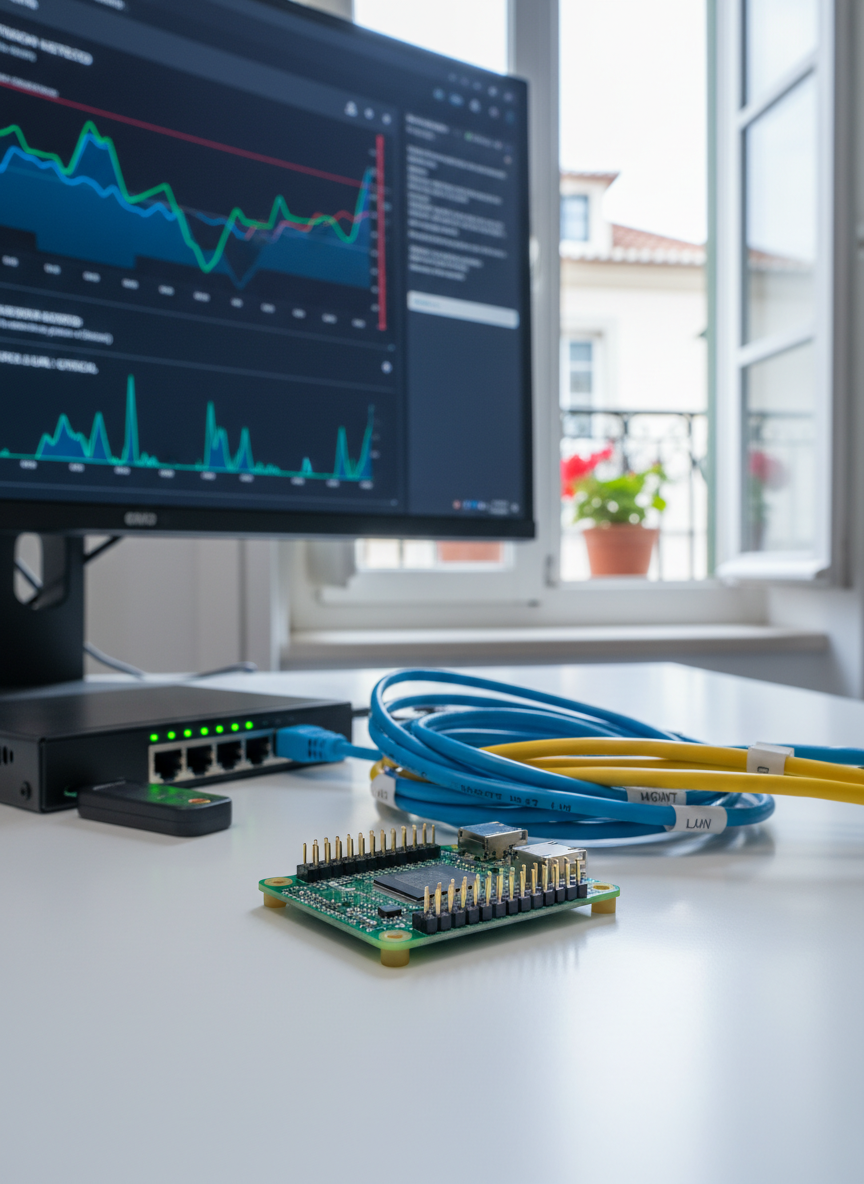
A sleek, compact Raspberry Pi board arranged at the center of a clean white desk, surrounded by neatly organized cybersecurity gear: a small network switch, labeled Ethernet cables, and a hardware security key. On a nearby high-resolution monitor, a blurred but clearly technical security dashboard glows with graphs and alerts, hinting at intrusion detection. Soft, cool daylight from a Lisbon-style balcony window washes over the scene, creating crisp reflections on the circuit board’s green surface and metallic connectors. Photographic realism, shot at eye level with a shallow depth of field, emphasizing the Pi in sharp focus while the background falls into a gentle bokeh, conveying a calm, professional, analytical mood.

Pi Labs

Step-by-step Raspberry Pi security builds with architecture notes, parts lists, and Ansible automation.
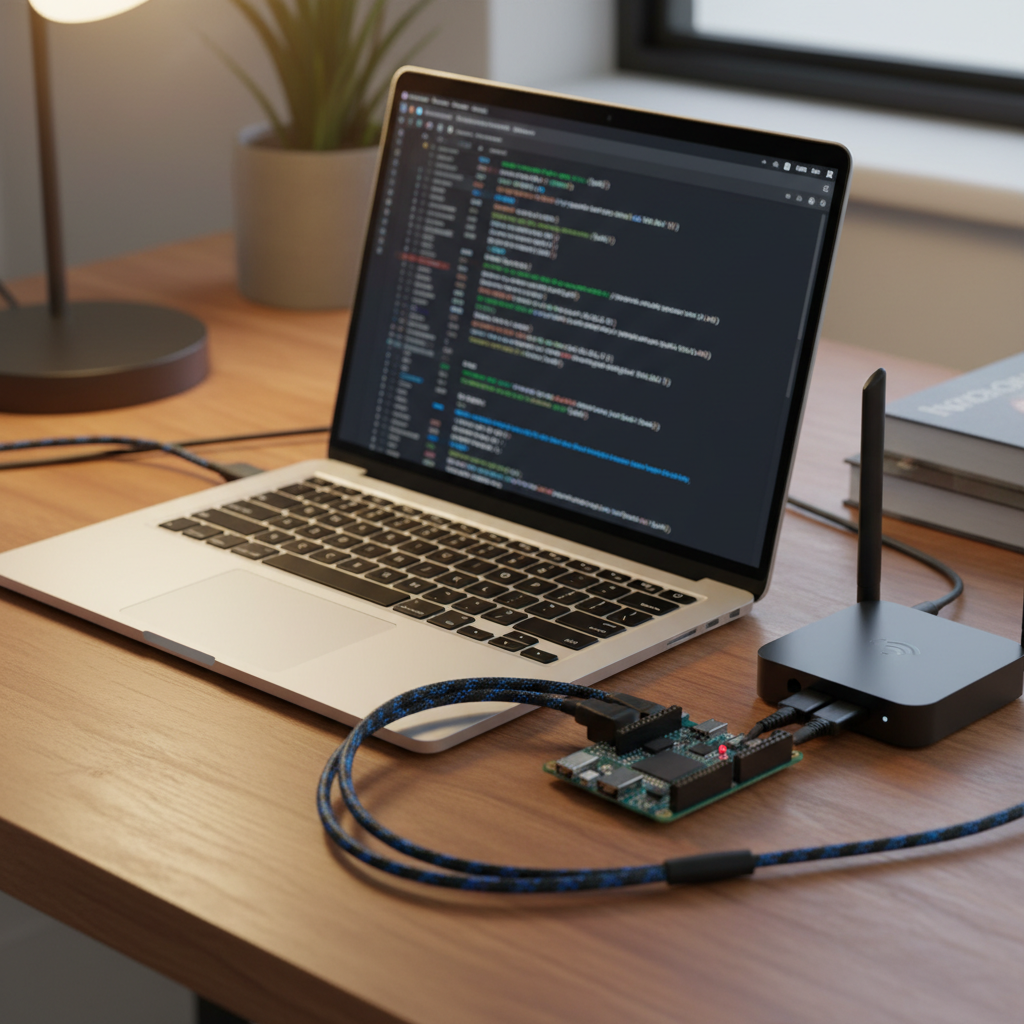
A slim laptop open on a wooden table, its screen displaying a dark-themed terminal running an Ansible playbook that configures hardened servers, with colorful syntax highlighting slightly out of focus to avoid readable text. Next to the laptop, a Raspberry Pi with a tiny blinking LED is connected via braided cables to a compact router. Evening indoor lighting from a warm desk lamp casts soft golden reflections on the laptop’s metallic chassis and creates mild shadows along the cable runs. Photographic realism from a three-quarter elevated angle, with a clean, modern composition and a focused, methodical atmosphere suited for a cybersecurity automation blog post.

Lab

This lab is a living notebook for affordable security experiments, built from Raspberry Pi boards, consumer routers, and spare laptops, with diagrams and Ansible playbooks you can copy, remix, and extend for your own home network.